|
Cliff
failure takes place primarily by the development of large rotational
slips which may extend well below sea level. There are about fourteen
major slips along the North coastal section. These are lubricated by
groundwater during the winter when most movement takes place. Movement
is mostly slow and progressive, but occasionally very rapid slipping
takes place.
|
||
 |
||
|
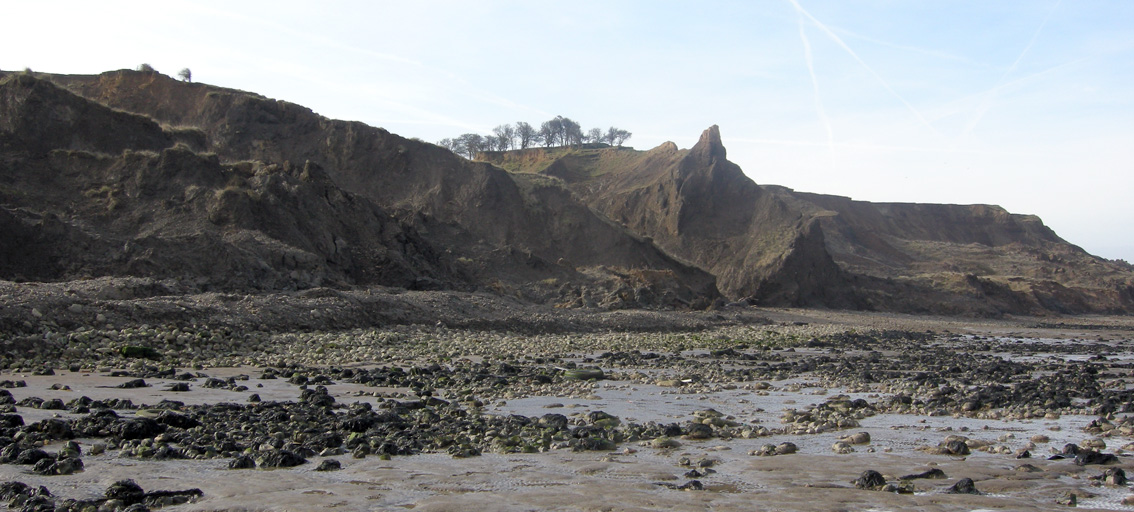
In the picture above, Barrows
Brook is a prime example of an arete, with a old rotational slump in the
distance. To the left (East) of the arete is a new rotation event which
will over the years work its way over the beach to be washed away by the
sea. |
||
 |
 |
|
|
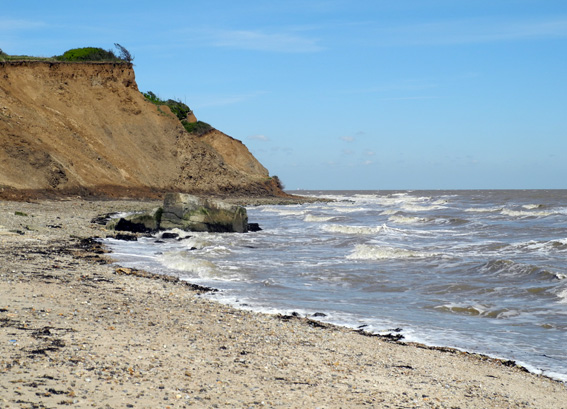
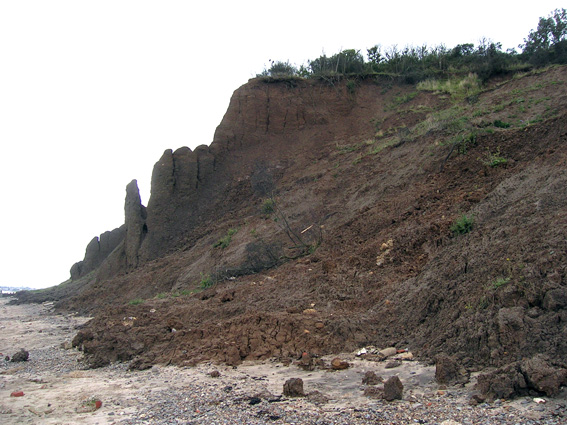
Slippage
on the in situ cliffs at Warden Bay
|
Vertical cracks typical of the London Clay. During wet weather, water runs into the cracks causing 'slip' to form. When the weight of the clay becomes critical slumping takes place along the 'slip' planes. (Slip describes liquified clay and is a term used in ceramics) |
|
 |
 |
|
|
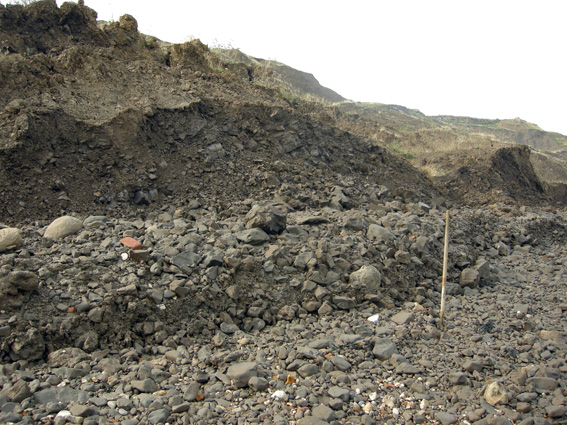
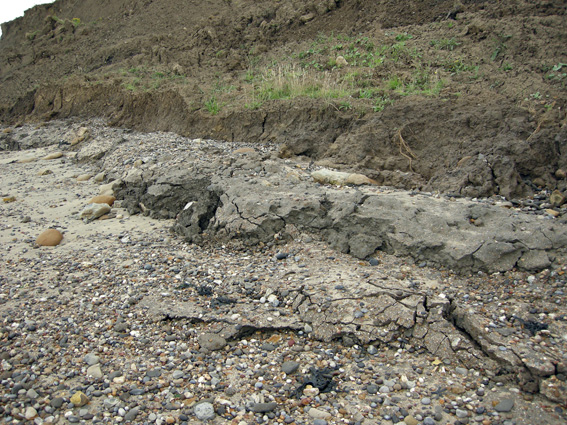
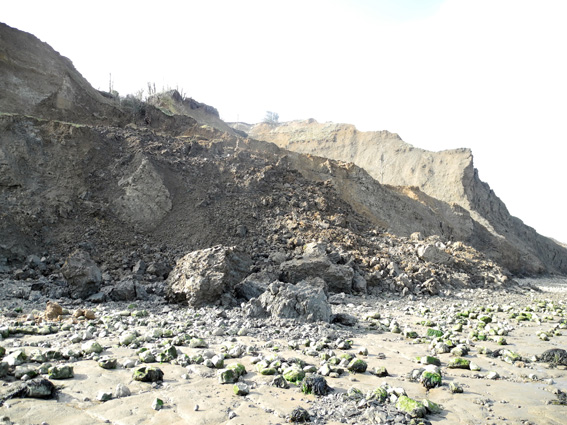
Examples
of beach heave at the junction of the cliffs and the beach
|
||
 |
 |
|
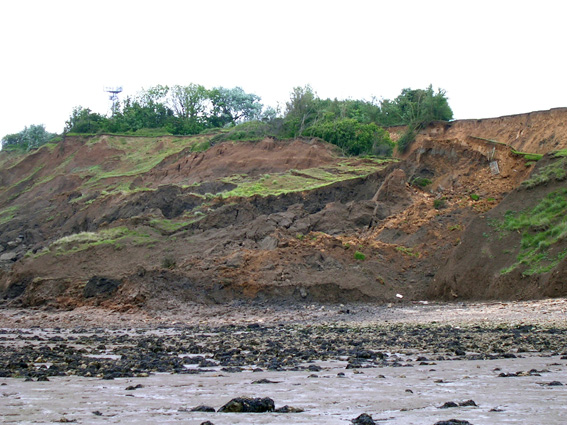
| Notice the arete in the backgound. This shows collapsed clay near to the Coastguard Lookout section west of Warden Point | Rotational slippage with beach heave whole areas of the field above are affected | |
 |
 |
|
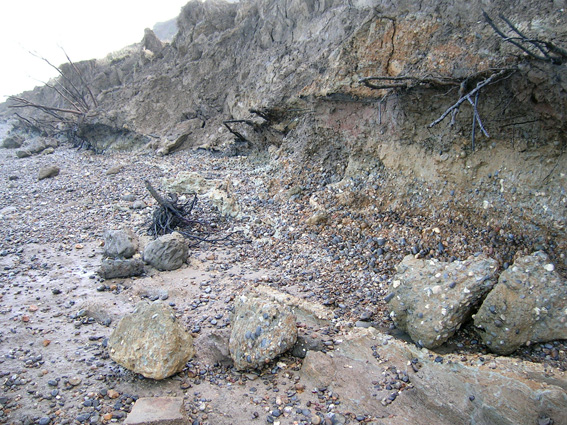
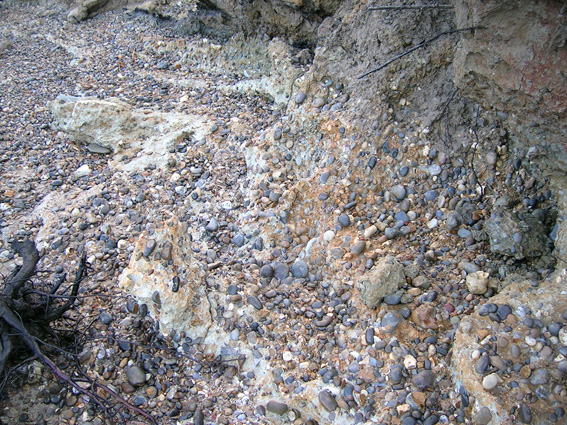
| At some point in the progress of the rotation the overlying strata are exposed at beach level. Here there is an example of river gravels eroding onto the beach between Hens Brook and Barrows Brook. In othe sections it is possible to find brick earth, the Virginia Waters formation or the Claygate beds. All vestiges of the overlying strata. | ||


|
||