|
Crabs
|
|||||
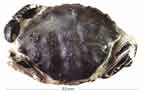
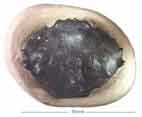
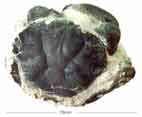
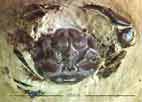
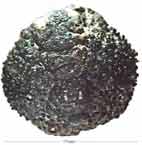
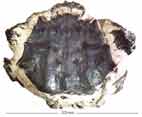
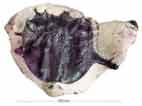
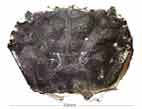
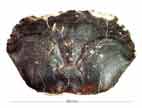
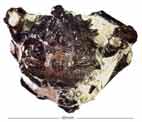
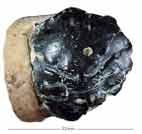
| Crabs, like other Arthropods have an exoskeleton which they have to shed in order to grow. The majority of crab fossils found on Sheppey are the result of this process. The shed exoskeleton is very fragile and is subject to crushing or dis-articulation. Crab fossils are relatively common on Sheppey, but complete specimens are quite rare. They are almost always found within phosphatic nodules either on the beach or foreshore. These phoshatic nodules are almost always a pale ochre colour with distinctive black where the fossil is exposed. | |||||
 |
 |
 |
 |
 |
 |
|
Zanthopsis
leachii (Desmarest)
|
Zanthopsis
bispinosa (M'Coy, 1849)
|
Xanthilites
bowerbanki (Bell, 1858)
|
Glyphithyreus
wetherelli (Bell, 1858)
|
Mithracia
libinioides (Bell, 1858)
|
Goniochela angulata (Bell, 1858) |
 |
 |
 |
 |
 |
|
|
Campylostoma
matutiforme (Bell, 1858)
|
Portunites
incerta (Bell, 1858)
|
Portunites
stintoni (Quayle)
|
Basinotopus
lamarckii (Desmarest)
|
||
|
If
you are scientifically minded follow the link to Jim Craigs summary
of London
clay
Crustacea
|
|||||


|
|||||